
Country: Sweden
Karolinska University Hospital is piloting a new model for nurse-led innovation. The model consists of a framework for enabling nursing organisations to work with innovation and a nurse-led innovation hub concept, where nurses can collaborate with the industry to co-develop solutions for healthcare. Through this, the hospital puts nurses in the driving seat of innovation in healthcare to both develop better solutions for healthcare and promote a sustainable work life for frontline staff.
We have developed an innovative GDP forecasting application based on Explainable Machine Learning (XML). It allows users to generate accurate and explicable economic forecasts from data sets with multivariate time-series. The application displays novel prediction changes for temporally ordered variable values, which largely increases the ability to explain predictions. It also includes a hybrid machine learning (ML) model that seamlessly combines all algorithms which outperform Sweden's National…
Case Study
Innovation Zones, Facets and Beyond – LIEPT (Lund Innovation Ecosystem Portfolio Tracking)…
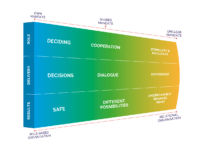
To provide a systematic approach for initiating and tracking collaborative development processes over time and inform investment decisions in multi-stakeholder environments, Future by Lund (FBL) has implemented a new model for innovation ecosystem portfolio tracking (LIEPT). The model benefits partnering stakeholders by building strategic competence for scaling solutions and working with innovation portfolios as an approach for governing and developing the ecosystem’s priority areas.
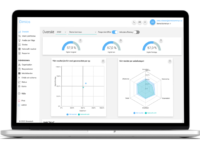
The Swedish Center for Digital Innovation has through a partnership with a small software development firm created a digital maturity assessment (DiMiOS) that has been nationally scaled in Sweden. DiMiOS has so far been used in over 400 public sector organizations. Through DiMiOS, public sector organizations are sharing new insights between and within municipalities, regions and agencies, increasing digital maturity in the entire sector. The assessment also acts as a data pump for research.
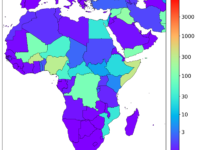
The Violence Early-Warning System (ViEWS) is a publicly available data-driven forecasting system at the frontier of research that generates monthly predictions of conflict fatalities up to 36 months ahead – throughout Africa and the Middle East. The project launched in 2017 to help policy-makers and practitioners plan anticipatory action and humanitarian interventions with a transparent and evidence-based approach. It is based at Uppsala University and Peace Research Institute Oslo.