

Electric Vehicle (EV) charging infrastructure - a vital component of London’s smart and green agenda - is being delivered by a wide range of public and private bodies across London (up to 50).
As a result of the project, we developed a dashboard to join up the EV Charging infrastructure in London to enable a collective understanding of what is already in place, how it is being used, and to guide future installations.
Global: Featured Case Studies

The GCF is the MMC’s response to the unmet needs of cities as they work to support migrants, refugees, & IDPs during COVID-19. By offering direct financial and technical support to cities in low & middle income countries, the GCF proves fiscal feasibility in places that are often disregarded by donors with low-risk tolerance. The vision is to create a model that can be scaled & replicated elsewhere to ensure that global responses to pressing challenges reflect & address realities on the…

As space missions increase in duration and distance, it will not be possible to bring all of the required crew consumables (air, water and food). The Deep Space Food Challenge incentivizes innovators globally to advance the field of food production technologies to meet both space exploration and terrestrial needs. This Challenge represents the first of its kind international collaboration between NASA, Centennial Challenges Program (CCP), the Canadian Space Agency and Impact Canada.
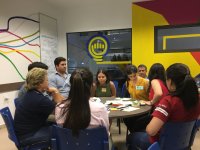
The Paraguayan government has designed and is executing its first National Innovation Strategy using a participatory approach. The intention is to co-design an Innovation Strategy by unifying different government sectors, the civil society, academia, and the private sector. This interactive process employs new and innovative strategies to include the community into the policymaking and agenda-setting process.

mVacciNation is a smartphone app to improve vaccine coverage in under-fives in the Global South by reducing drop-out rates and addressing issues in stock and management. Parents are sent text messages to remind them when their child’s appointments are, improving adherence to vaccine schedules and enabling a greater number of children to be fully immunised. All of the app's data synchronizes with the Cloud in real-time, so stock levels and fridge temperatures can even be tracked offline!

The Scenario Exploration System was developed to facilitate the application of futures thinking to policy-making originally geared at engaging EU policy-makers with foresight scenarios very easily.
The tool operates as a multi-role board game that makes participants naturally grasp complex opportunities and constraints in a future-oriented perspective. Never before had a tool been able to facilitate the uptake of foresight for policy-making and systemic thinking to such an extent.
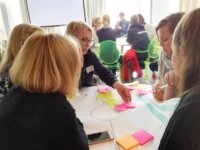
Even though the Finnish education system still ranks highly among international comparisons, it is under pressure to reinvent itself. The Innovation Centre based at the Finnish National Agency for Education (EDUFI) has carried out a year-long, facilitated process, The Experimentation Lab to support teachers, school leaders and local education administrators to co-create local solutions to address complex challenges and simultaneously inspire transformation in education governance.
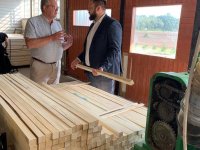
We often hear stories about the interpretations of laws and attitudes of public institutions. This year in Latvia for the first time the initiative “An Official Shadows an Entrepreneur” was launched, allowing for the public servant to broaden his view and “step into entrepreneur's shoes” to evaluate how the regulation is applied in practice and what requires further improvements. The initiative promotes a dialogue between the state and the business to reduce the administrative burden.
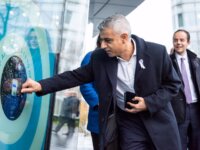
Homelessness is spiralling in the UK, and people want to help but are unsure how and no longer carry cash. In partnership with Mayor of London, TAP London has installed 100 contactless giving points across the city, enabling Londoners to give a £3 tap to support local homelessness services.
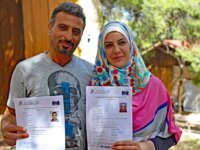
The European Qualifications Passport for Refugees is a unique instrument providing refugees with an assessment of qualifications that cannot be fully documented. Based on the Lisbon Recognition Convention (Council of Europe/UNESCO), the methodology tested by the Council of Europe, the UNHCR, nine countries, National Recognition Centres and universities enables refugees to have their qualifications accepted across borders to continue their studies or find a job related to their education.